Let’s clear something up first.
Nobody set out to make their home toxic. It just happened slowly — one “extra powerful” cleaner, one “kills 99.9% germs” promise, one strong-smelling bottle at a time.
But here’s the hopeful part: the same way habits sneak in, they can sneak out.
You don’t need to throw away everything under your sink or move to the mountains. You just need a few quiet switches — the kind that don’t feel like effort.
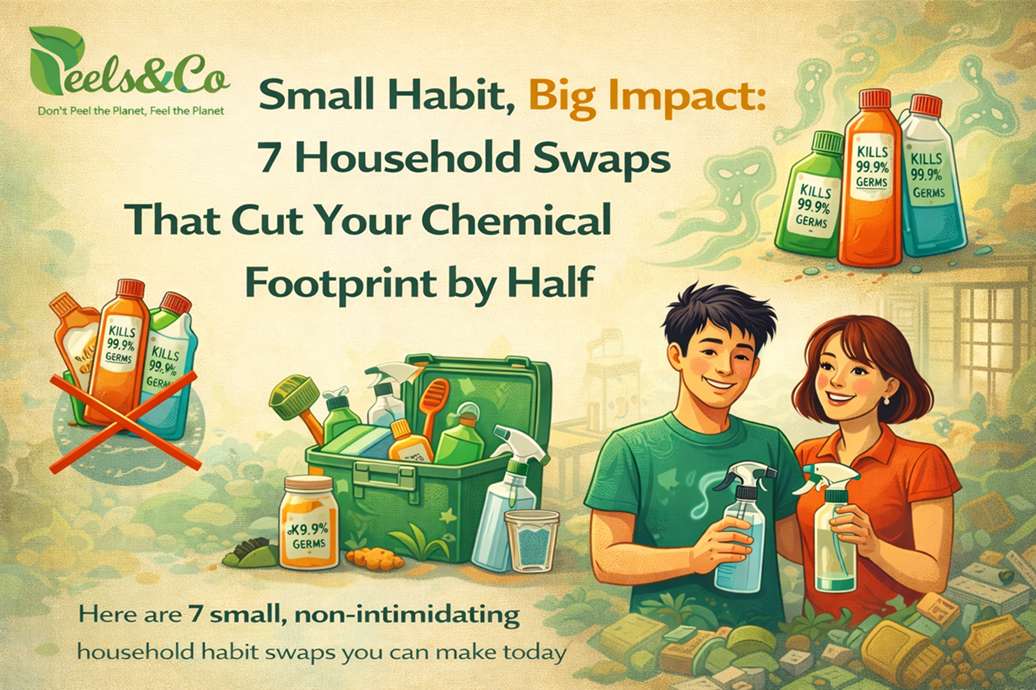
Here are 7 small, non-intimidating household habit swaps you can make today to drastically cut your chemical footprint.
- Use Less — Seriously, Much Less
Most of us clean by instinct, not instruction. Which usually means: more product = more clean.
In reality, most cleaners are concentrated enough to work with far less than we use. Try cutting the amount in half once. If your floor still shines (it will), you’ve just reduced chemical runoff, fumes, and skin exposure instantly.
This is the easiest win on the list.
2. Don’t Mix Products “For Extra Power”
That little jugad instinct — mixing two cleaners to make them “stronger”?
Please don’t.
Combining products (especially bathroom and floor cleaners) can release harmful fumes and create reactions that are far worse than dirt. Using one product at a time is safer, smarter, and far better for indoor air quality.
More aggressive doesn’t mean more effective — it often just means more harmful.
3. Clean More Often, Not More Aggressively
This one sounds counterintuitive, but it works.
Light, regular cleaning requires far less chemical force than occasional deep cleans. A quick daily wipe with mild solutions prevents grime buildup — meaning you don’t need harsh products later.
Consistency beats intensity. Every single time.
4. Let Time Do the Heavy Lifting
If you’re scrubbing harder, you’re probably rushing.
Soap and water need time to work. Let your cleaner sit on surfaces for a few minutes instead of adding more or scrubbing aggressively. Dirt loosens naturally, and you reduce both effort and exposure.
Patience is an underrated sustainability tool.
5. Wash Your Cleaning Tools (They’re Dirtier Than You Think)
A dirty mop or sponge spreads bacteria instead of removing it — which tricks us into using stronger cleaners to compensate.
Rinse tools thoroughly after use. Dry them in sunlight when possible. Replace only when necessary.
Cleaner tools = gentler cleaning habits.
6. Rinse Once After Cleaning
Most people clean and walk away.
But residue stays.
A quick rinse or wipe-down with plain water after cleaning removes leftover chemicals from surfaces — especially kitchen counters and floors where kids and pets spend time.
It’s a tiny step that dramatically reduces daily chemical contact.
7. Choose Products You Don’t Need to “Recover” From
If cleaning leaves you with headaches, watery eyes, or a strange tight feeling in your chest — that’s not normal. That’s feedback.
This is where plant-based cleaners quietly make sense. Not as a trend, but as a relief. Brands like Peels & Co focus on formulations that clean without overwhelming homes or waterways — and once you experience that difference, going back feels unnecessary.
No drama. Just comfort.
The Quiet Power of Small Shifts
Sustainability doesn’t require announcements.
It works best when it becomes invisible — woven into everyday habits that feel normal.
You don’t need to change everything.
Just change one thing, and stick to it.
That’s how homes change.
That’s how rivers recover.
That’s how impact actually happens.
Slowly. Surely. One habit at a time.