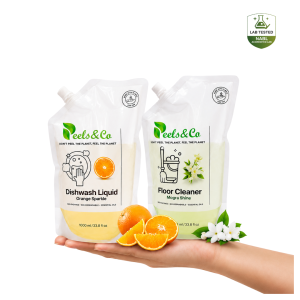

The Truth About Fragrance: Why “Lemon Fresh” Isn’t Lemon at All
There’s a moment most of us recognise. You finish mopping the floor. The house smells sharply “lemony.” For a second, it feels like everything is in order. Clean. Fresh. Sorted.
That smell becomes the signal. A clean kitchen smells like citrus. Fresh laundry smells like something floral. A just-washed bathroom carries that familiar, slightly sharp scent that almost reassures you things are hygienic.
But here’s the part we rarely stop to question. What exactly are we smelling? Because more often than not, that “lemon fresh” note has never met a lemon.
The Comfort of Familiar Scents


Smell is deeply emotional. It bypasses logic and goes straight to memory. Many of us grew up in homes where cleaning had a signature scent. That smell meant effort had been made. It meant care. It meant someone had taken time to put things back in place.
Over the years, that association hardened into expectation. No scent often feels like no cleaning. A subtle scent feels like not enough. A strong scent feels like job well done.
Manufacturers understand this psychology very well.
That’s why fragrances are not just added to cleaning products—they are engineered to signal effectiveness, whether or not they actually contribute to cleaning.
What “Fragrance” Actually Means
“Fragrance” on an ingredient label sounds harmless. Almost vague. Almost pleasant. The reality is more layered. Fragrance is often a blend of dozens, sometimes hundreds, of individual chemical compounds. Many of these are synthetically created to mimic natural smells – like lemon, lavender, or pine. The goal isn’t authenticity.
The goal is consistency, longevity, and cost efficiency. A real lemon scent is volatile. It fades quickly. It changes depending on the source. Synthetic fragrance is designed to last longer, smell stronger, and behave predictably across batches. That’s why your floor cleaner smells exactly the same every single time. Yet that consistency comes with trade-offs we don’t always see. That’s why planet friendly brands like Peels use plant-based essential oils to add a natural fragrance to its cleaners that don’t harm anybody in any way.
Why “Lemon Fresh” Isn’t Lemon


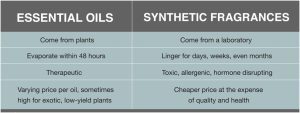
A real lemon contains a complex mix of natural compounds. Limonene is one of the primary ones responsible for its scent. Synthetic fragrances isolate and replicate such compounds—or create alternatives that smell similar enough. But similarity isn’t equivalence. A cleaning product labelled “lemon fresh” might contain no actual lemon extract. It may rely entirely on synthetic aroma chemicals designed to evoke the idea of lemon.
The difference matters. Natural scents evolve. They soften. They disappear gently. Synthetic scents are often designed to linger. To stay noticeable long after the cleaning is done. That lingering quality is what many people have come to associate with cleanliness. Yet it’s also what can make spaces feel slightly overwhelming over time.
The Invisible Layer in Your Home
Fragrance doesn’t just sit in the air. It settles. On floors. On fabrics. On surfaces. Every time you mop, spray, or wash, you’re not just removing dirt, you’re also leaving behind a layer of whatever the product contains.
This layer is rarely visible. But you might have noticed its effects. A dining table that feels slightly coated after cleaning. Clothes that carry a scent long after they’ve dried.
A room that smells “fresh,” yet feels heavy after a while. These are subtle signals. For many people between 30 and 50, managing a home isn’t just about appearance anymore. It’s about comfort. About how a space feels at the end of a long day. And that invisible layer can quietly interfere with that.
Fragrance and Sensitivity
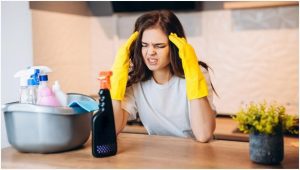



Bodies change over time. Sensitivities shift. Something that never bothered you before might suddenly feel too strong. A scent that once felt pleasant might start triggering mild headaches or irritation. This is more common than people talk about. Synthetic fragrance blends can include compounds that some individuals react to especially with repeated exposure. Children, in particular, can be more sensitive. Clothes washed in heavily fragranced detergents sit against their skin for hours. Floors cleaned with strong products become play areas. The connection isn’t always obvious. Yet many households quietly adapt – switching products, airing rooms longer, reducing usage. These adjustments often happen without fully understanding the cause.
The Illusion of Freshness
Freshness has been redefined over time. It used to mean clean air. Open windows. Sunlight on washed clothes. Now it often means a specific kind of smell. A citrus note for kitchens. A floral note for laundry. A sharp, almost medicinal note for bathrooms. But freshness doesn’t actually have a smell.
It’s the absence of unwanted odours. The absence of residue. The absence of heaviness. Once you experience a truly neutral space, where nothing artificial lingers, you begin to notice how different it feels. Lighter. Easier. More breathable. That shift is subtle, yet powerful.
Where Plant-Based Cleaning Fits In
Plant-based cleaning products approach fragrance differently. They don’t rely on heavy synthetic blends to signal effectiveness. Some use mild, naturally derived scents. Others keep fragrance minimal. The focus shifts back to function.
Does it clean well?
Does it rinse off completely?
Does it leave the space feeling neutral?
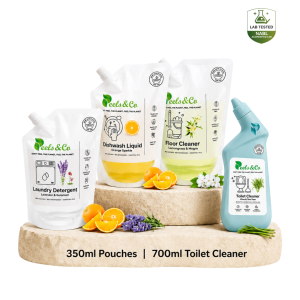
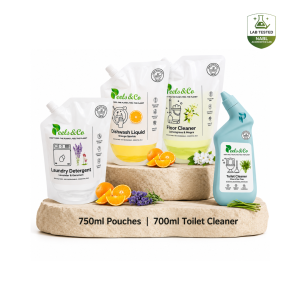
Peels & Co operates in this space.
Handwash that cleans without leaving a sharp after-smell.
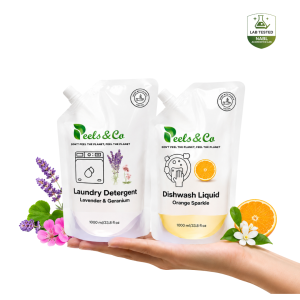
Dishwashing liquid that removes grease without making your kitchen smell artificial.
Laundry detergent that leaves clothes feeling fresh without carrying an overpowering scent.
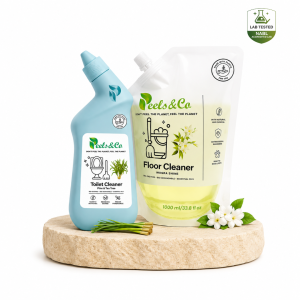
Floor and toilet cleaners that do their job without dominating the air.
The experience is different. At first, it may feel understated. Almost like something is missing. Then you realise what’s actually missing, the excess.
A More Honest Kind of Clean
There’s a certain honesty in a space that doesn’t announce itself loudly. A kitchen that smells like nothing, yet feels clean. Clothes that feel fresh without carrying a synthetic signature.
Floors that don’t leave behind a trace of what was used on them. This kind of clean doesn’t rely on performance theatre. It relies on doing the job well, and stepping back.
For people managing careers, families, and homes in cities like Gurgaon, this matters more than it seems. Life is already full of noise. Products don’t need to add to it.
The Takeaway
“Lemon fresh” was never about lemons. It was about creating a shortcut, something that signals cleanliness instantly, even if it doesn’t reflect what’s actually happening. Once you see that, your relationship with cleaning products changes. You start asking different questions. What is this made of? What does it leave behind? How does my home feel after I use it? Plant-based cleaning isn’t about removing fragrance entirely. It’s about using it more thoughtfully. More sparingly. More honestly.
And sometimes, the cleanest space is the one that doesn’t smell like anything at all.